
Digital PCR Decoded: Choosing the Right PCR for the Absolute Quantification
Imagine you have successfully extracted DNA from a patient sample. Now comes an important question: Which molecular technique should you choose?
- Conventional PCR?
- Quantitative PCR (qPCR)?
- Digital PCR (dPCR)?
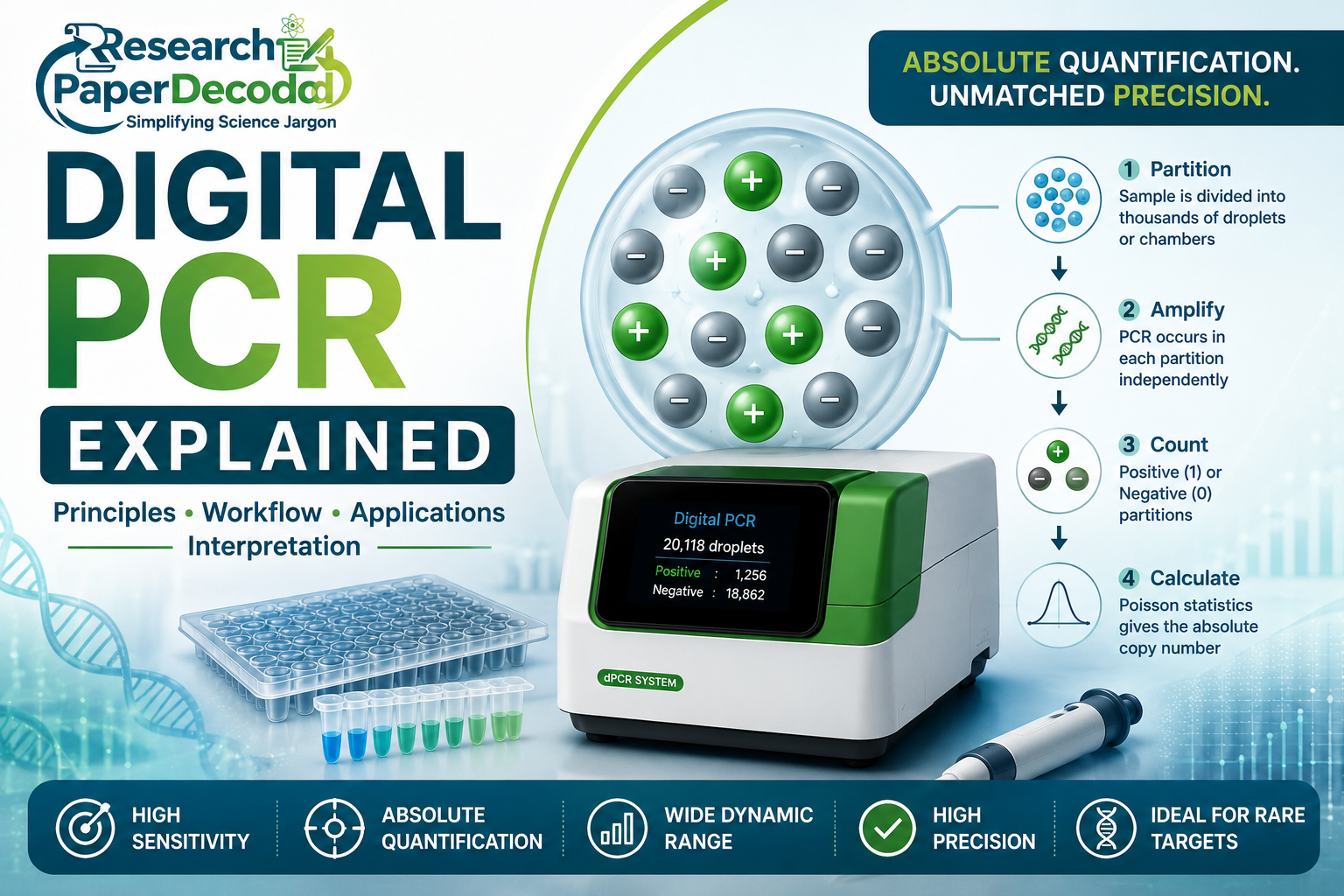
Many students and even new researchers assume that Digital PCR is simply the latest and therefore the best version of PCR. But science rarely works that way. Every molecular technique was developed to solve a specific problem. Choosing Digital PCR for every experiment is like using a Formula One race car to buy groceries—it may work, but it is unnecessary, expensive, and often inefficient.
In this article, we’ll decode Digital PCR from a researcher’s perspective. Instead of merely explaining how it works, we’ll answer the questions that matter most:
- Why was Digital PCR invented?
- Why is it called Digital PCR?
- When should you choose Digital PCR?
- When should you avoid it?
- What laboratory setup is required?
- How are Digital PCR results interpreted?
- How do researchers connect the results with biological findings?
Let’s begin.
The Evolution of PCR: Why Digital PCR Was Needed
To understand Digital PCR, we first need to understand the limitations of the technologies that came before it.
Conventional PCR:
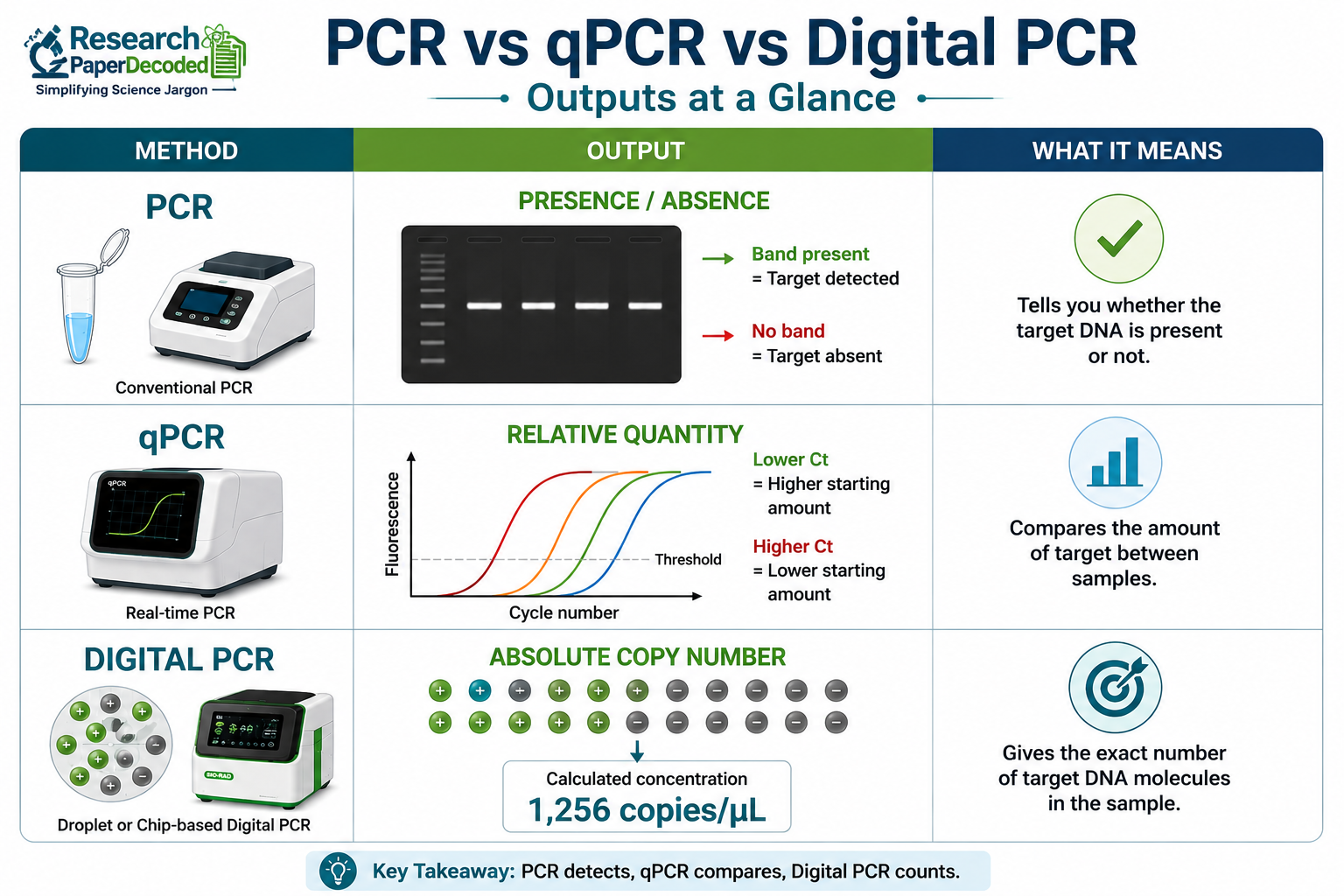
Conventional PCR answers one simple question: Is my target DNA present?
The result is usually interpreted using agarose gel electrophoresis. Band present? Target detected. No band? Target absent. Simple and reliable.
Quantitative PCR (qPCR):
Scientists soon wanted more than just detection. They wanted to know: How much DNA or RNA is present?
Real-time PCR (qPCR) solved this problem by monitoring fluorescence during amplification. Instead of only saying yes or no, qPCR estimates the amount of nucleic acid in a sample. However, qPCR usually relies on: Standard curves, Amplification efficiency, Ct (Cycle threshold) values. These factors introduce variability, especially when detecting extremely low copy numbers.
Digital PCR (dPCR)/ Digital Droplet PCR (ddPCR)
Researchers working on cancer, infectious diseases, prenatal diagnosis, and copy number variation needed something different. They wanted to answer a new question: Exactly how many target DNA molecules are present in the sample?
That requirement led to the development of Digital PCR (dPCR). Unlike PCR and qPCR, Digital PCR performs absolute quantification, eliminating the need for standard curves. Digital PCR was first introduced by Vogelstein and Kinzler in 1999 as a method for absolute nucleic acid quantification through sample partitioning.
Why Is It Called “Digital” PCR?
The word Digital often confuses beginners. Many assume the machine is more computerized. Others think artificial intelligence is involved. Neither is true. The word “digital” comes from binary logic. Think about a light switch.
- OFF = 0
- ON = 1
Computers process information using these two states. Digital PCR follows the same principle. Instead of treating the entire sample as one reaction, it divides the sample into thousands—or even tens of thousands—of tiny independent PCR reactions called partitions. Each partition has only two possible outcomes:
- Positive amplification = 1
- No amplification = 0
Thousands of these binary results are then combined to estimate the number of target molecules present in the original sample. This simple idea is what gives Digital PCR its name.
How Does Digital PCR Work?
Although different manufacturers use different technologies, the overall workflow is remarkably similar.
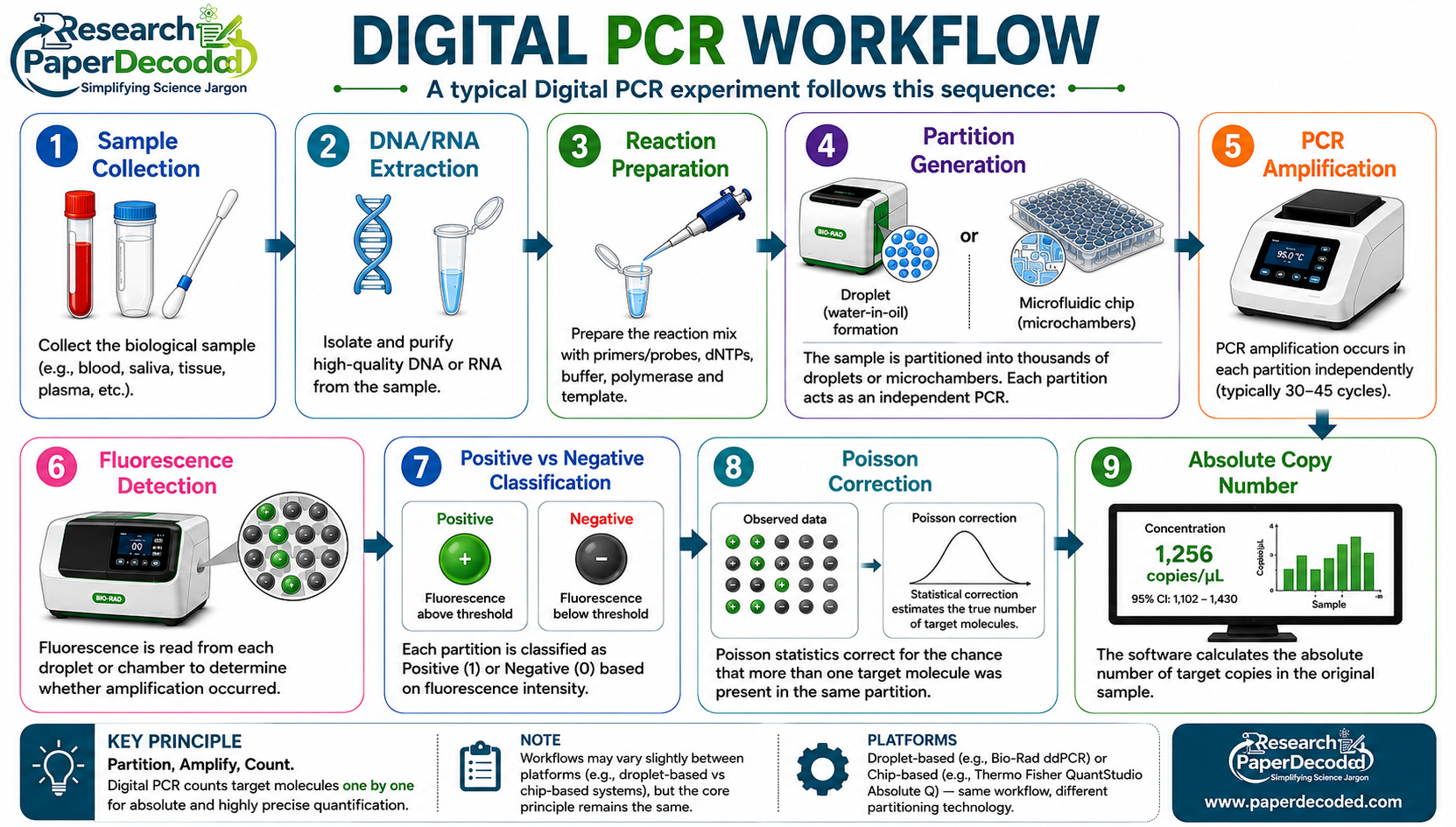
- DNA or RNA is extracted from the sample.
- The PCR reaction mixture is prepared.
- The reaction is partitioned into thousands of tiny droplets or microscopic chambers.
- PCR amplification occurs independently within every partition.
- Each partition is analyzed for fluorescence.
- The software classifies each partition as positive or negative.
- Mathematical correction using Poisson statistics estimates the original number of target molecules.
Instead of measuring fluorescence continuously like qPCR, Digital PCR counts the number of positive partitions. It is essentially counting DNA molecules rather than estimating them.
Understanding Partitioning
Imagine trying to count people in a crowded stadium. Nearly impossible. Now imagine giving every person a separate room. Counting suddenly becomes easy.
Digital PCR follows exactly this concept. Rather than analyzing one large PCR tube containing millions of DNA molecules, the sample is divided into thousands of miniature PCR reactions. Some partitions receive:
- No DNA
- One DNA molecule
- Occasionally more than one DNA molecule
After amplification, each partition simply reports: Positive or Negative. The software then reconstructs the original concentration.
The Infrastructure Requirement for Digital PCR
One common misconception is that purchasing a Digital PCR machine alone is enough. In reality, Digital PCR requires a complete molecular biology workflow. Most laboratories already performing PCR or qPCR will have:
- Micropipettes
- PCR workstation
- Mini centrifuge
- Vortex mixer
- Refrigerated centrifuge
- NanoDrop or Qubit
- Thermal cycler
- DNA/RNA extraction facility
Digital PCR-Specific Equipment
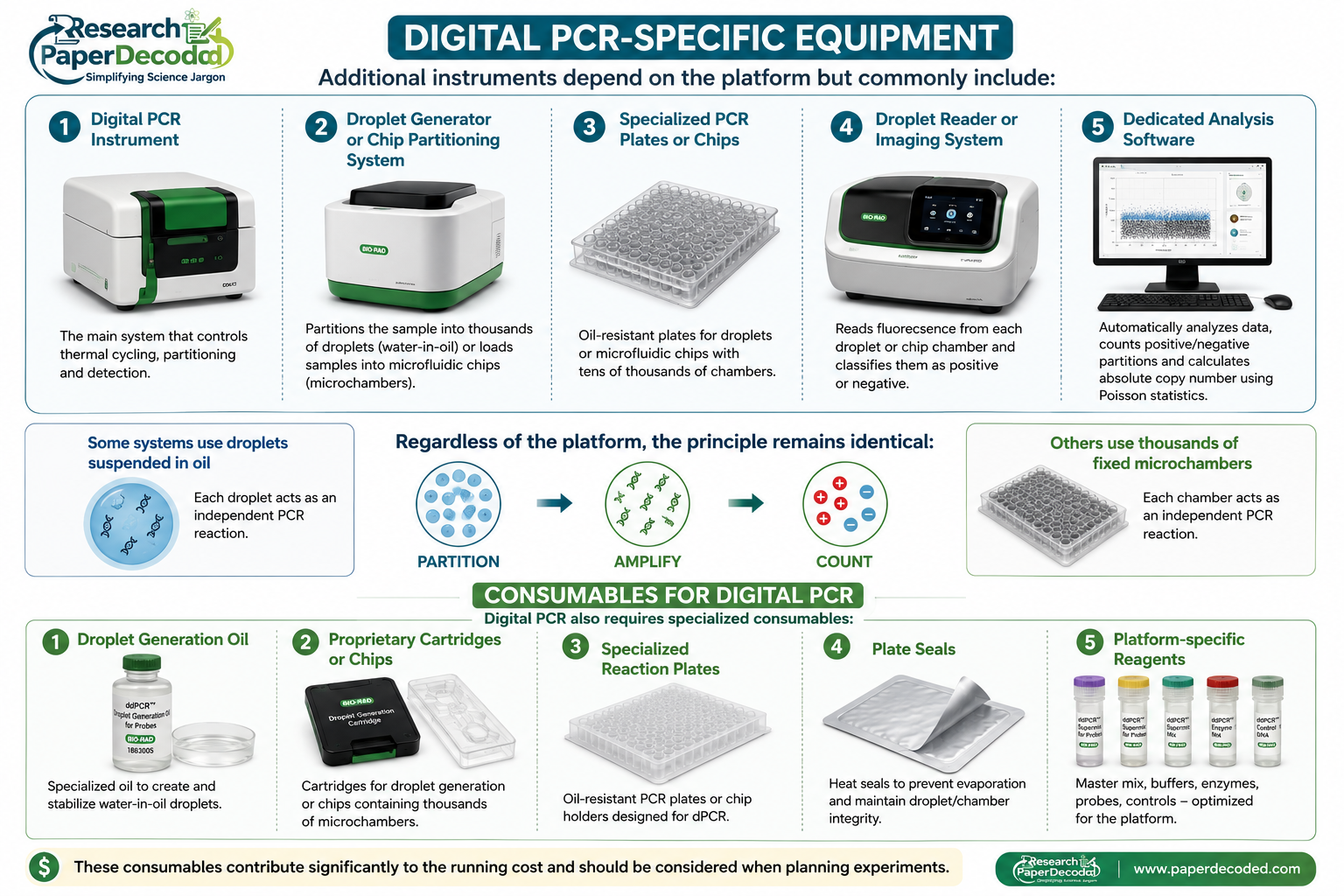
Additional instruments depend on the platform but commonly include:
- Digital PCR instrument
- Droplet generator or chip partitioning system
- Specialized PCR plates or chips
- Droplet reader or imaging system
- Dedicated analysis software
Some systems use droplets suspended in oil, while others use thousands of fixed microchambers. Regardless of the platform, the principle remains identical: partition, amplify, count.
Consumables for Digital PCR
Digital PCR also requires specialized consumables, such as:
- Droplet generation oil
- Proprietary cartridges or chips
- Specialized reaction plates
- Plate seals
- Platform-specific reagents
These consumables contribute significantly to the running cost and should be considered when planning experiments.
When Should You Choose Digital PCR?
Digital PCR is not designed to replace PCR or qPCR. It is designed for situations where precision and absolute quantification matter. Typical applications include:
Rare mutation detection: Detecting one mutant allele among thousands of normal DNA molecules.
Copy number variation: Measuring subtle changes in gene copy number.
Minimal residual disease: Monitoring extremely small amounts of cancer cells after treatment.
Viral load measurement: Especially when viral concentrations are very low.
Reference material characterization: Producing accurate standards for diagnostic laboratories.
Environmental microbiology: Absolute quantification of microbial targets without standard curves.
When Should You NOT Use Digital PCR?
Digital PCR is powerful, but it is not always the right choice. You probably do not need Digital PCR for:
- Routine pathogen screening
- Colony PCR
- Cloning confirmation
- Standard endpoint PCR experiments
- Most undergraduate laboratory practicals
- Routine relative gene expression studies
- Projects where budget is limited and absolute quantification is unnecessary
Always let your research question determine the technique—not the popularity of the technology.
A Simple Decision Guide
Ask yourself these questions before choosing a method.
Do I only need to know whether the target is present?
Yes → Conventional PCR
Do I need relative quantification or gene expression analysis?
Yes → qPCR
Do I need absolute copy numbers with high precision?
Yes → Digital PCR
Designing a Successful Digital PCR Experiment
Good Digital PCR starts long before partitioning. Researchers should carefully consider:
- Primer and probe design
- Amplicon length
- DNA quality
- Sample purity
- Target abundance
- Appropriate controls
- Replicate strategy
Digital PCR cannot compensate for poor experimental design.
How Are Digital PCR Results Interpreted?
This is where many beginners become confused. After the run, the software typically displays thousands of partitions. Each partition appears as either: Positive or Negative. The software separates these populations using fluorescence intensity. Researchers then evaluate:
- Number of accepted partitions
- Positive partitions
- Negative partitions
- Confidence interval
- Partition quality
- Separation between positive and negative clusters
The proportion of positive partitions is then used to estimate the original concentration.
Find out how a conventional PCR is interpreted with Agarose Gel Electrophoresis.
Why Is Poisson Statistics Used in Digital PCR?
An obvious question arises. What happens if two DNA molecules accidentally enter the same partition? If every positive partition were counted as exactly one molecule, the result would underestimate the true concentration.
Digital PCR solves this problem using the Poisson distribution, which estimates the probability that multiple target molecules occupied the same partition. Fortunately, modern analysis software performs this calculation automatically. As a researcher, it is more important to understand why the correction is needed than to memorize the equation.
How Do Researchers Decide Whether the Experiment Worked?
Experienced researchers rarely stop after obtaining a copy number. Instead, they ask:
- Were enough partitions successfully generated?
- Are the positive and negative populations clearly separated?
- Did the negative control remain negative?
- Did the positive control amplify as expected?
- Is there excessive “rain” (intermediate fluorescence)?
- Do replicate samples agree with one another?
Only after answering these questions they can interpret the biological findings.
Aligning Digital PCR Results with Biological Findings
Numbers alone do not answer biological questions. Suppose a Digital PCR assay estimates 185 copies/µL of viral DNA. What does that actually mean?
The answer depends on context. Researchers compare the result with: Clinical symptoms, Previous patient samples, Treatment history, Control samples, Biological replicates, Published literature, Diagnostic thresholds (where validated).
A result becomes meaningful only when interpreted alongside the biological or clinical question. This is why Digital PCR is more than a counting technique—it is a decision-support tool.
Advantages of Digital PCR
- Absolute quantification
- No standard curve required
- Excellent precision at low target concentrations
- High sensitivity for rare mutations
- Reduced influence of PCR efficiency
- Excellent reproducibility
Limitations of Digital PCR
Despite its advantages, Digital PCR has important limitations.
- Expensive instrumentation
- Higher consumable costs
- Additional workflow steps
- Lower throughput for some applications
- Requires careful assay optimization
- Not necessary for many routine molecular biology experiments
Choosing Digital PCR simply because it is newer may increase costs without improving the scientific outcome.
Think Like a Researcher
Scenario 1
A microbiologist wants to confirm whether Salmonella enterica is present in a food sample.
Best choice: Conventional PCR
Why?
Presence or absence is sufficient.
Scenario 2
A researcher wants to compare gene expression before and after drug treatment.
Best choice: RT-qPCR
Why?
The objective is relative gene expression, not absolute molecule counting.
Scenario 3
An oncologist wants to detect a rare cancer mutation present in only a tiny fraction of circulating DNA.
Best choice: Digital PCR
Why?
High analytical sensitivity and absolute quantification are essential.
Key Takeaways About Digital PCR (dPCR)
Digital PCR is not simply a more advanced PCR technique—it is a different way of thinking about nucleic acid quantification. Instead of estimating DNA concentration from amplification curves, Digital PCR divides a sample into thousands of tiny reactions, converts each reaction into a binary outcome, and uses statistics to determine the original number of target molecules.
The most important lesson is not how Digital PCR works, but when it should be used. If your research question requires absolute quantification, rare mutation detection, or exceptional analytical precision, Digital PCR is an outstanding choice. If your question can be answered using conventional PCR or qPCR, those techniques remain simpler, faster, and more cost-effective.
The best researchers are not those who always use the newest technology—they are those who choose the right technology for the right scientific question.
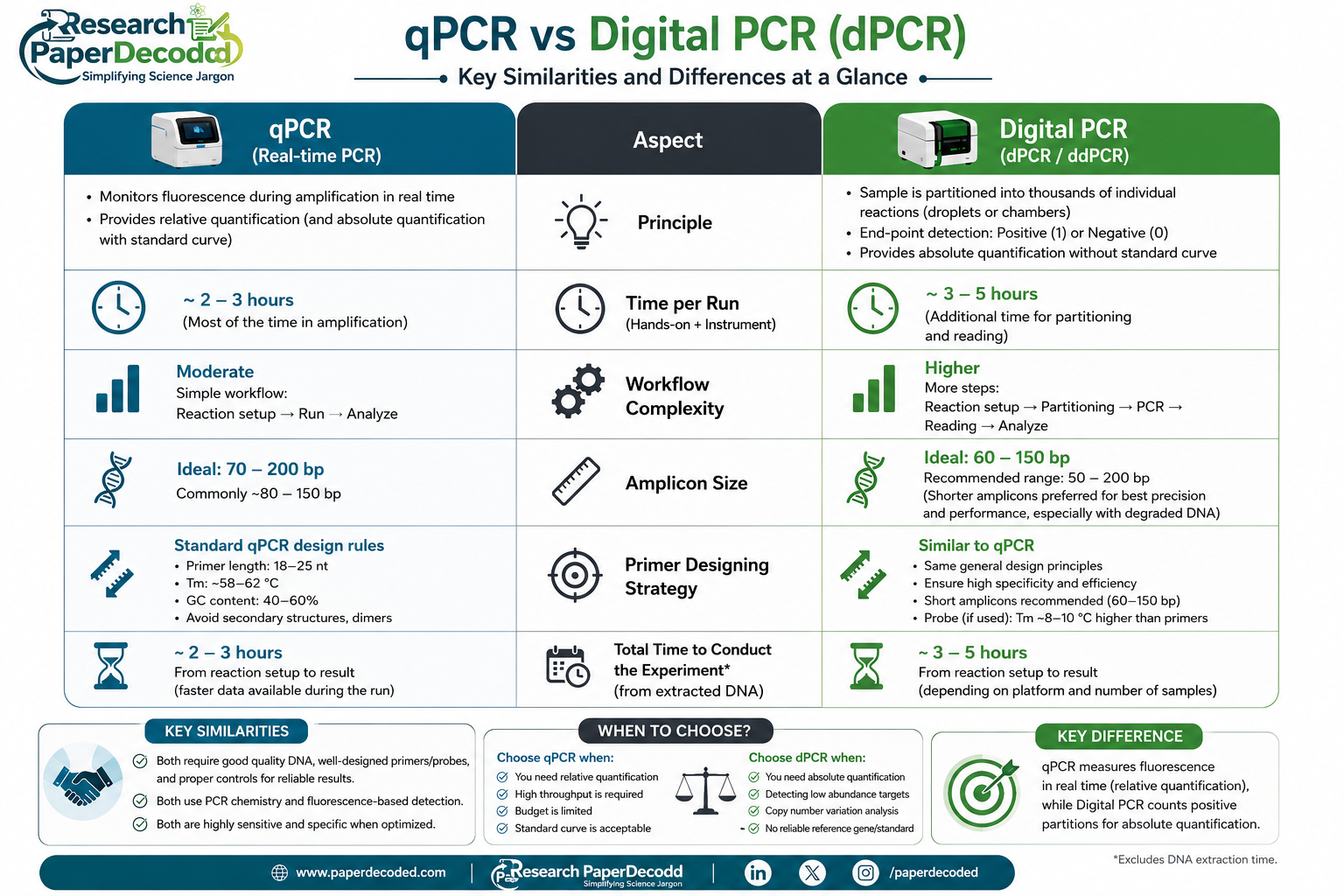
PaperDecoded Quick Take
PCR tells you whether a target is present.
qPCR estimates how much is present.
Digital PCR determines how many copies are present by partitioning the sample into thousands of tiny reactions and counting positive partitions. It offers unmatched precision for applications such as rare mutation detection, copy number variation analysis, and low-level pathogen quantification—but it is not a universal replacement for PCR or qPCR.
Continue Reading
➜ PCR Mechanism Explained: How Polymerase Chain Reaction Amplifies DNA
➜ Agarose Gel Electrophoresis Explained: Principle, Mechanism and Applications
➜ Why Do DNA Bands Smile? The Hidden Physics Behind Curved Agarose Gel Bands (Lab Notes #01)
➜ Digital PCR Explained: What It Is, When to Use It & How to Interpret Results || Methods Decoded
➜ Why Cell Culture Uses a CO₂ Incubator Instead of an O₂ Incubator || The Concept Decoded

Editor, Research Paper Decoded