
What if we told you that the most important gas inside a cell culture incubator isn’t there for the cells at all?
Every cell culture laboratory relies on a CO₂ incubator, yet few researchers ever ask why carbon dioxide is so important. After all, cells use oxygen—not carbon dioxide—to produce energy. So why is 5% CO₂ the global standard? The answer reveals a fascinating connection between physiology, chemistry, and cellular homeostasis—one that underpins almost every biological experiment.
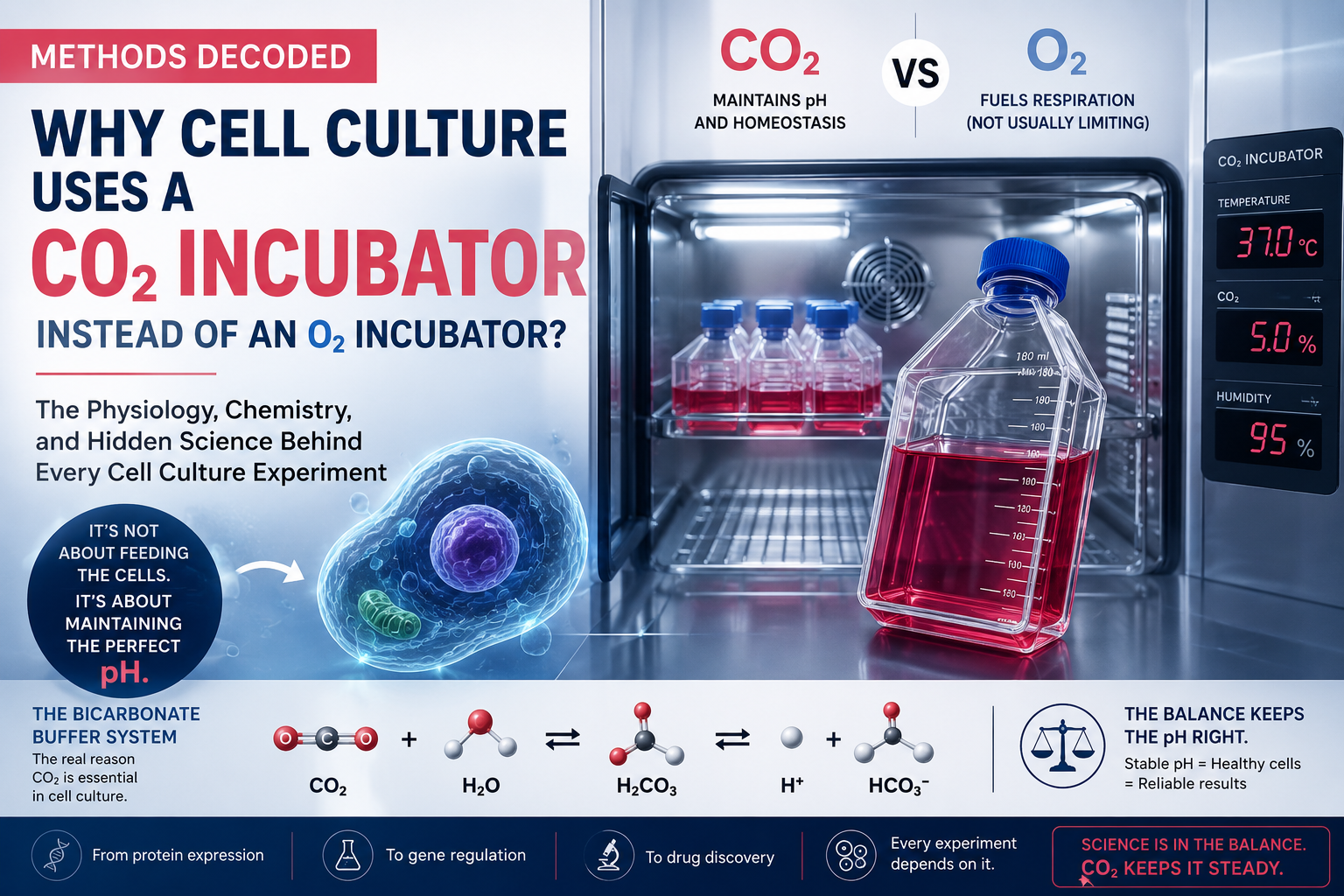
Why Do Cell Cultures Use a CO₂ Incubator Instead of an O₂ Incubator? The Physiology, Chemistry, and Hidden Science Behind Every Cell Culture Experiment
Every Cell Culture Lab Has One. But Have You Ever Wondered Why?
Walk into almost any molecular biology or biotechnology laboratory, and you’ll find a familiar piece of equipment quietly running in the corner—a CO₂ incubator.
The display almost always reads:
- 37°C
- 95% humidity
- 5% CO₂
These settings are so common that most researchers never question them. They simply place their culture flasks inside, close the door, and move on to the next experiment.
But pause for a moment and think about it. Human cells consume oxygen to produce energy. They don’t use carbon dioxide as a nutrient. So why do laboratories spend thousands of dollars on CO₂ incubators instead of O₂ incubators?
The answer is surprisingly elegant. It has very little to do with respiration and almost everything to do with maintaining one of the body’s most tightly regulated physiological parameters—pH.
Cell Culture Is Really an Exercise in Recreating the Human Body
When cells live inside our body, they never experience an isolated environment.
Every second, they are surrounded by extracellular fluid that maintains an incredibly stable internal environment—a phenomenon known as homeostasis. Blood continuously regulates:
- Temperature
- Nutrient availability
- Electrolyte balance
- Osmolarity
- Oxygen levels
- Carbon dioxide levels
- Most importantly, pH
For most mammalian tissues, the extracellular pH is maintained within a remarkably narrow range of 7.35–7.45.
This precision isn’t accidental. Proteins, enzymes, receptors, ion channels, and signaling molecules have evolved to function optimally within this range. Even a small deviation can alter cellular behavior. When researchers remove cells from the body and grow them in a culture flask, they must recreate this physiological environment as closely as possible. The CO₂ incubator is one of the key tools that makes this possible.
The Hidden Ingredient Inside Every Cell Culture Medium
Take a closer look at the composition of common mammalian cell culture media such as: DMEM, RPMI-1640, MEM, F-12, IMDM and other modified media. Among dozens of nutrients, amino acids, vitamins, and salts, one ingredient appears repeatedly:
Sodium bicarbonate (NaHCO₃)
This isn’t simply another chemical in the recipe. It is the foundation of the buffering system that keeps the medium at physiological pH. Interestingly, this is exactly the same buffering system used by human blood. Instead of inventing a new solution, scientists borrowed one that evolution had already perfected.
The Chemistry That Makes CO₂ Essential
The bicarbonate buffer is governed by one reversible chemical equilibrium:
CO₂ + H₂O ⇌ H₂CO₃ ⇌ H⁺ + HCO₃⁻
Although this equation appears simple, it controls the chemical environment experienced by every cultured mammalian cell.
Here’s what happens: Carbon dioxide dissolves into the culture medium and combines with water to form carbonic acid. Carbonic acid then partially dissociates, releasing hydrogen ions (H⁺) and bicarbonate ions (HCO₃⁻). Those hydrogen ions determine the acidity—or pH—of the medium.
This means the incubator isn’t supplying carbon dioxide because the cells need it. It is supplying carbon dioxide because the buffer system needs it. Without adequate CO₂, the entire equilibrium shifts, causing the medium to become progressively alkaline.
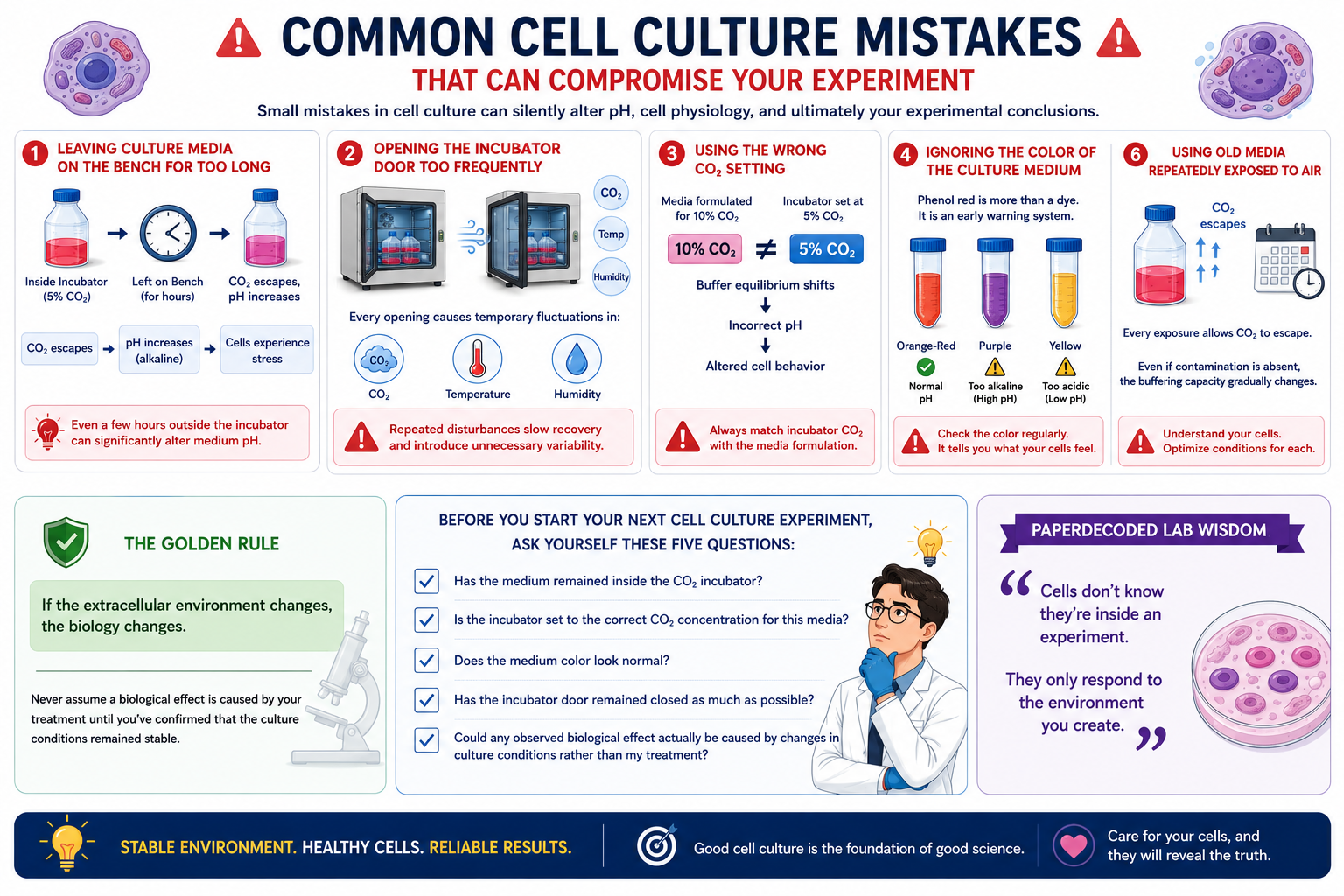
Why Does the Medium Turn Pink When Left Outside?
Most mammalian culture media contain phenol red, a pH indicator.
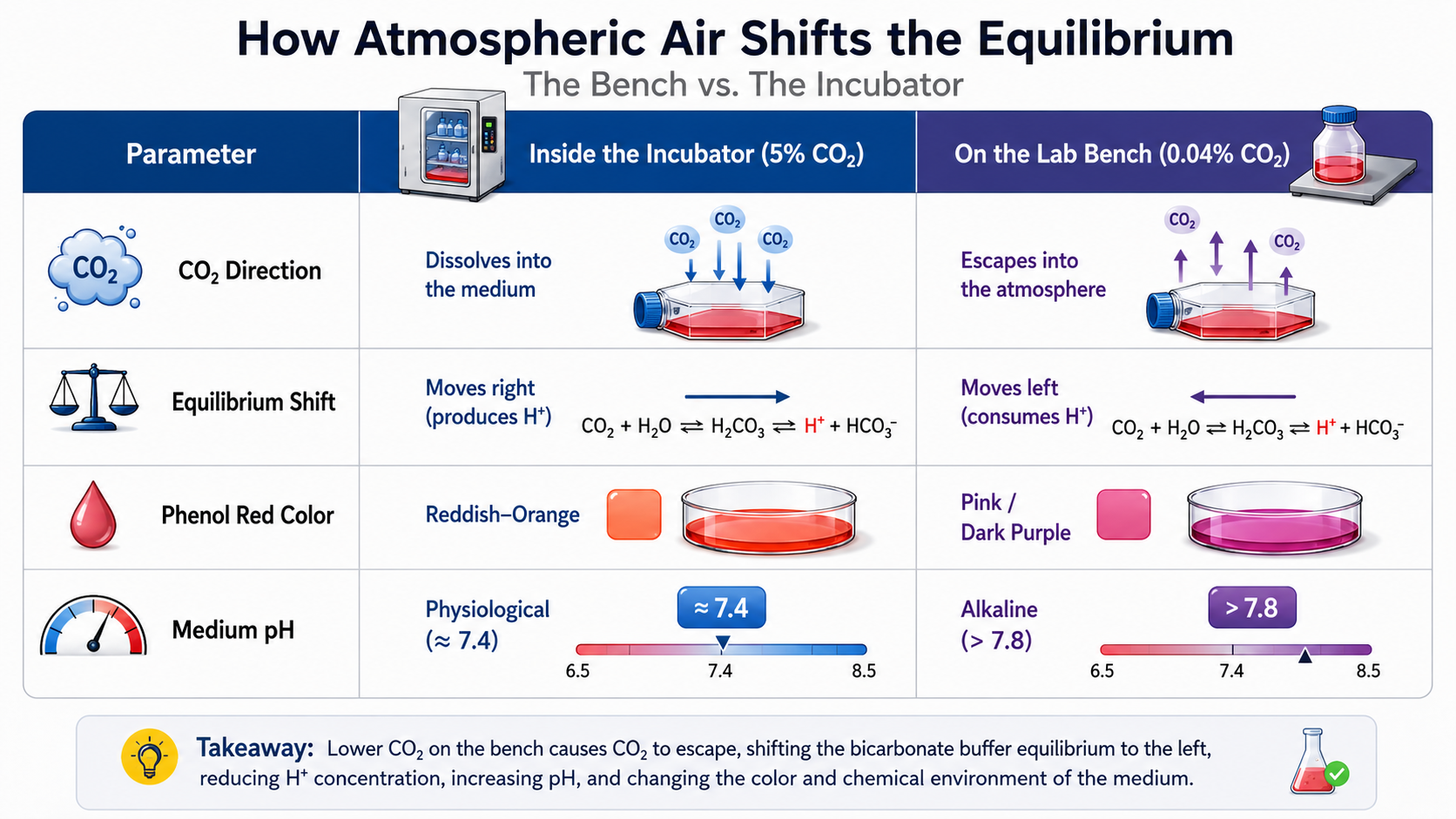
You’ve probably noticed something interesting. Freshly prepared media stored in a CO₂ incubator usually appears reddish-orange.
Leave the same flask on the laboratory bench for an hour, or after multiple use of stock media, it slowly becomes pink or even purple.
What changed? Not the cells. Not the nutrients. Only the chemistry.
Atmospheric air contains only about 0.04% CO₂, compared with the 5% CO₂ inside a standard incubator. As the medium sits outside or get atmospheric exposure the dissolved carbon dioxide escapes into the surrounding air. The bicarbonate equilibrium shifts toward lower carbonic acid formation, fewer hydrogen ions remain in solution, and the pH increases. Phenol red simply makes this invisible chemical process visible. The color change is essentially a warning sign that your cells are no longer experiencing their normal physiological environment.
Why Exactly 5% CO₂?
Many people assume that 5% CO₂ is a universal biological requirement. But it is not that simple.
The value is actually determined by chemistry. Commercial media are formulated with a specific concentration of sodium bicarbonate. That bicarbonate concentration is carefully balanced with approximately 5% CO₂ to produce a physiological pH close to 7.4.
This relationship is described by the Henderson–Hasselbalch equation:
pH = pKa + log([HCO₃⁻]/(0.03 × PCO₂)
[0.03 constant represents the solubility coefficient of CO₂ in water/medium at 37°C]
This equation tells us that pH depends on the ratio between bicarbonate and dissolved carbon dioxide. Increase CO₂, and the medium becomes more acidic. Decrease CO₂, and the medium becomes more alkaline.
Some specialized culture media contain higher bicarbonate concentrations and therefore require 7.5–10% CO₂ to maintain the correct pH. The exact percentage may vary, but the principle never changes.
If Cells Need Oxygen, Why Isn’t Oxygen Increased Instead?
Cells absolutely require oxygen. Inside mitochondria, oxygen acts as the final electron acceptor during oxidative phosphorylation, allowing efficient ATP production. Without oxygen, cellular energy metabolism rapidly fails. So why don’t laboratories increase oxygen concentrations?
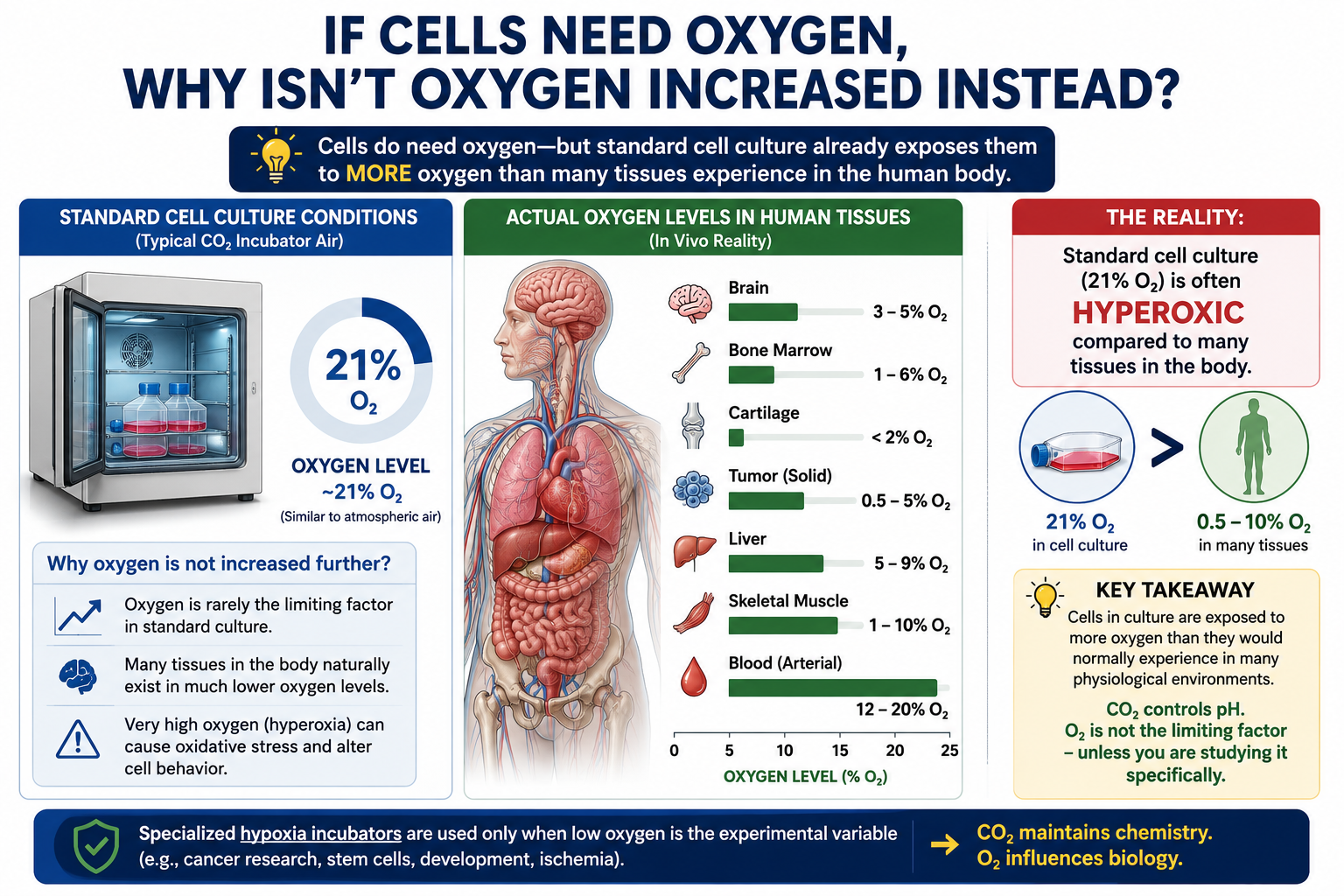
Because oxygen is rarely the limiting factor in conventional cell culture. Atmospheric air already contains approximately 21% oxygen, which is actually much higher than the oxygen concentration experienced by many tissues inside the human body. For example:
- Brain tissue typically experiences about 3–5% oxygen
- Bone marrow often exists at 1–6% oxygen
- Cartilage survives at less than 2% oxygen
- Solid tumors frequently contain below 5% oxygen
Ironically, conventional cell culture exposes many cells to more oxygen than they normally encounter in vivo. From this perspective, standard cell culture is often considered hyperoxic, not oxygen deficient.
Then Why Do Hypoxia Incubators Exist?
Some biological questions specifically require oxygen control. Researchers studying cancer biology, stem cells, embryonic development, wound healing, ischemia, or hypoxia-inducible factor (HIF) signaling often use tri-gas incubators. Unlike conventional incubators, these systems independently regulate: Carbon dioxide, Oxygen, Nitrogen.
Nitrogen is used to reduce oxygen concentration while maintaining the desired CO₂ level. Notice something important. Even when oxygen is experimentally manipulated, CO₂ remains carefully controlled. That’s because oxygen regulates cellular metabolism, while carbon dioxide maintains extracellular pH. These are fundamentally different physiological functions.
Why This Matters for Every Biological Experiment
Whether you’re performing:
- Western blotting
- CRISPR gene editing
- RNA sequencing
- Drug screening
- Viral infection assays
- Protein expression studies
- Cell signaling experiments
- Cytokine analysis
- Stem cell differentiation
- Molecular mechanism research
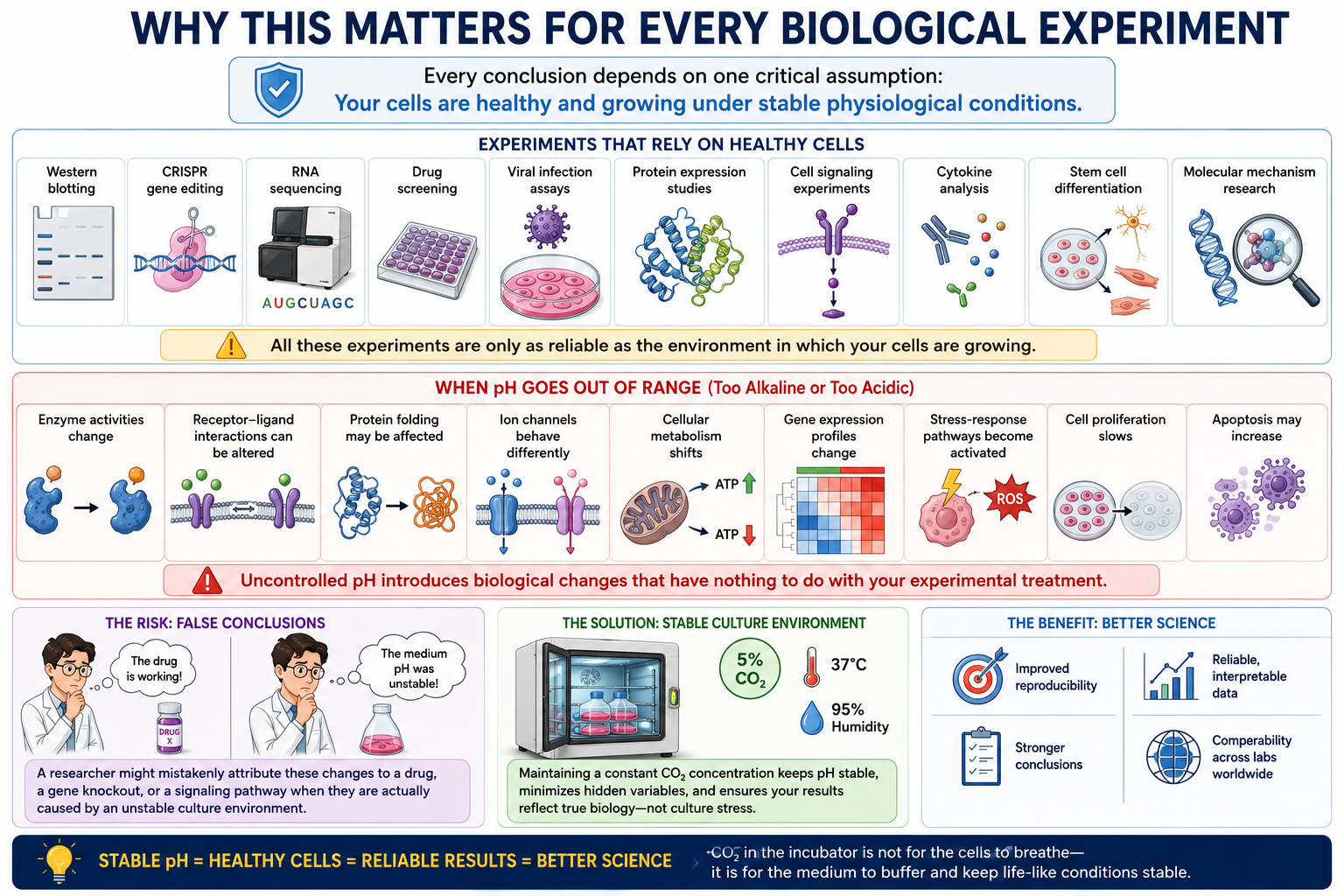
Every conclusion depends on one critical assumption: Your cells are healthy and growing under stable physiological conditions. If the culture medium becomes too alkaline or too acidic:
- Enzyme activities change.
- Receptor-ligand interactions can be altered.
- Protein folding may be affected.
- Ion channels behave differently.
- Cellular metabolism shifts.
- Gene expression profiles change.
- Stress-response pathways become activated.
- Cell proliferation slows.
- Apoptosis may increase.
In other words, an uncontrolled pH can introduce biological changes that have nothing to do with your experimental treatment.
A researcher might mistakenly attribute these changes to a drug, or a gene knockout, or a signaling pathway when they are actually caused by an unstable culture environment. Maintaining a constant CO₂ concentration minimizes this hidden source of experimental variability and improves reproducibility across laboratories worldwide.
Why the CO₂ Incubator Became the Global Standard
The reason is simple. The bicarbonate–CO₂ buffering system closely mimics the extracellular environment found in mammals.
It is: Physiologically relevant, Chemically reliable, Inexpensive, Easy to maintain, Highly reproducible, Compatible with nearly every mammalian cell line
This is why laboratories across the world—from basic research labs to pharmaceutical companies—use CO₂ incubators as the standard platform for mammalian cell culture. Whether the goal is understanding a signaling pathway, discovering a new drug, producing recombinant proteins, or developing gene therapies, researchers begin with the same principle: Keep the extracellular environment as close to the human body as possible.
The Bigger Picture: A CO₂ Incubator Is Really a Homeostasis Machine
Many students believe a CO₂ incubator exists to “give carbon dioxide to cells.” That idea misses the real story. The incubator isn’t primarily feeding the cells. It is maintaining the chemical conditions that allow the cells to behave as if they were still inside the body. By stabilizing the bicarbonate buffering system, the incubator recreates one of the most fundamental aspects of mammalian physiology—a stable extracellular pH. Everything else in cell biology, from protein synthesis and metabolism to gene regulation and molecular signaling, depends on that foundation.
PaperDecoded Quick Take
The next time you place a flask inside a CO₂ incubator, remember this: The incubator isn’t supplying carbon dioxide because cells need to “breathe” it. It’s supplying carbon dioxide because your culture medium needs it.
The bicarbonate–CO₂ buffer keeps the pH close to 7.4, allowing proteins to fold correctly, enzymes to function efficiently, signaling pathways to remain stable, and cells to behave as they would inside the body. In other words, the CO₂ incubator isn’t just warming your cells—it is recreating one of life’s most fundamental physiological control systems.
Once you understand that, the familiar “5% CO₂” display on every incubator stops being just another laboratory setting. It becomes a reminder that successful cell culture is not simply about keeping cells alive—it’s about preserving the delicate chemistry that makes life possible.

Editor, Research Paper Decoded
Great content! Keep up the good work!
Hi Watts, Thank you for your appreciation. It means a lot.