
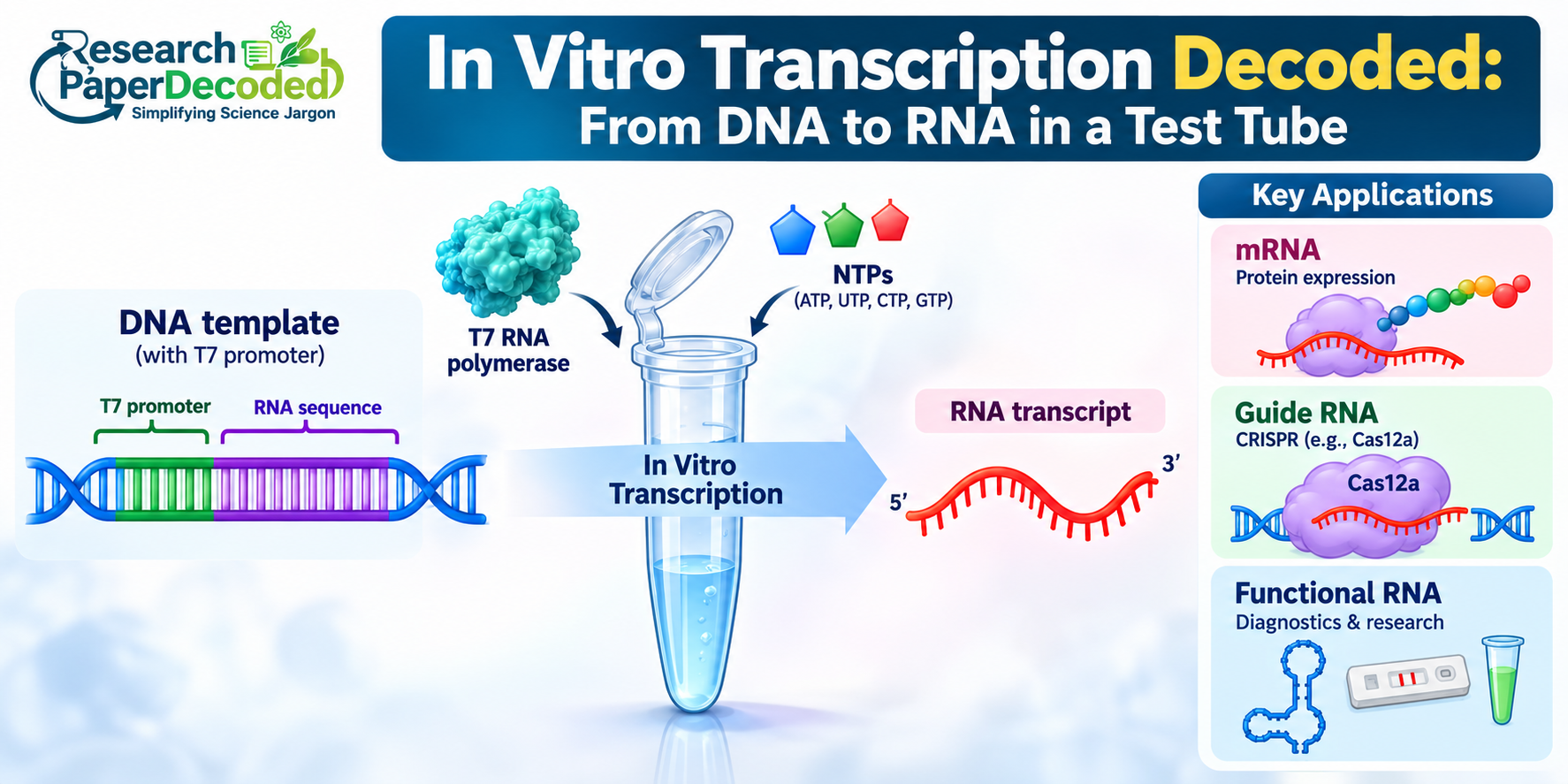
In Vitro Transcription (IVT) is a technique used to synthesize RNA from a DNA template outside living cells. This article explains how T7 RNA polymerase drives RNA synthesis and how the process is designed and performed. It also covers major applications of IVT, including mRNA, molecular diagnostics, and CRISPR-Cas12a crRNA production.
Can We Make RNA Outside a Cell?
Inside every living cell, thousands of molecular reactions happen continuously. DNA stores genetic information, RNA carries and regulates that information, and proteins perform many of the functions required for life.
One of the fundamental processes connecting these molecules is transcription. During transcription, an RNA polymerase reads a DNA template and produces an RNA molecule.
But molecular biology has done something fascinating with this natural process. Instead of allowing transcription to happen only inside a living cell, researchers can take the essential components of the process and recreate it in a controlled reaction tube. This is called In Vitro Transcription (IVT). In its simplest form:
DNA template + RNA polymerase + nucleotides → RNA
It sounds simple. But this seemingly straightforward reaction has become an important technology for producing RNA for research, biotechnology, medicine, synthetic biology, and molecular diagnostics.
So, what exactly happens during In Vitro Transcription? And how can a researcher design a piece of DNA and use it to manufacture a specific RNA molecule? Let’s decode it.
1. What Is ‘In Vitro Transcription (IVT)’?
In Vitro Transcription is the synthesis of RNA from a DNA template outside a living cell.
The term in vitro literally means “in glass”, referring broadly to experiments performed outside a living organism under controlled laboratory conditions. In an IVT reaction, the DNA provides the sequence information, the RNA polymerase provides the molecular machinery, and the four ribonucleotides—ATP, GTP, CTP, and UTP—provide the building blocks needed to construct the RNA molecule.
A commonly used enzyme for this purpose is T7 RNA polymerase. It recognizes a specific DNA sequence called the T7 promoter and synthesizes RNA downstream of that promoter. Synthetic oligonucleotides, PCR products, and linearized plasmid DNA can all be used as templates for T7-based IVT, depending on the application and template design.
In simple terms: Designed DNA → T7 RNA polymerase → Desired RNA
But there is a bigger idea hidden behind this technique.
2. When Molecular Biology Recreates Nature in a Tube
Inside a cell, transcription is a carefully coordinated molecular process. A promoter marks where transcription should begin. RNA polymerase recognizes the promoter, the DNA is locally opened, and RNA nucleotides are assembled into a growing RNA strand. The polymerase then moves along the template as the RNA molecule is extended.
Researchers realized that they did not necessarily need the entire cell to reproduce this particular process. They could provide the essential molecular components themselves. This is one of the most powerful ideas in molecular biology:
Take a biological process, understand its essential components, and rebuild the process under controlled laboratory conditions.
In Vitro Transcription is a clear example of this approach. Instead of asking a cell to produce the RNA we want, researchers can design a DNA template and allow a purified RNA polymerase to produce the RNA in a reaction tube. The cell has been replaced by a carefully designed biochemical system.
3. From DNA Information to an RNA Molecule
To understand IVT, let’s first understand the basic idea of transcription.
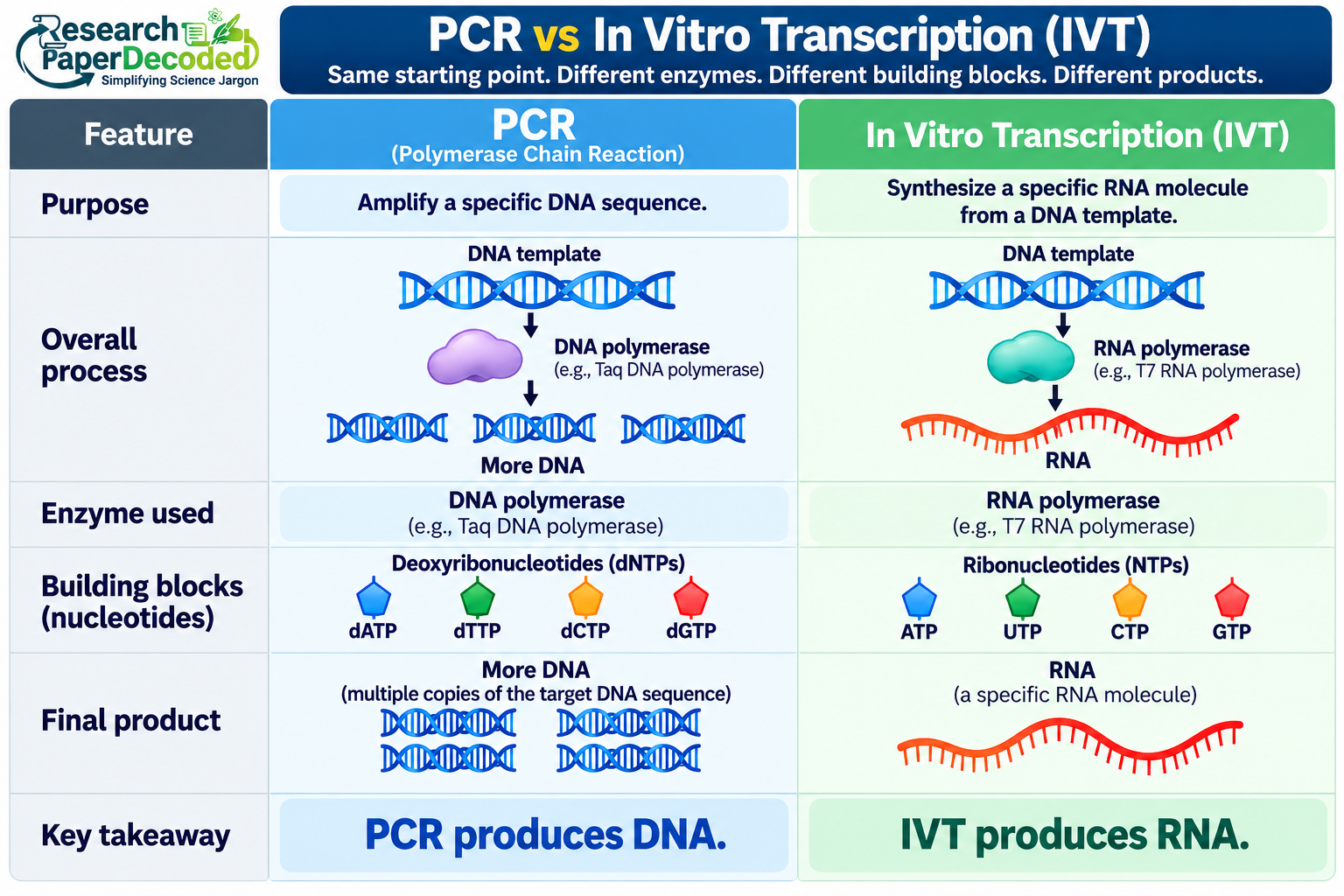
In natural transcription, DNA acts as the template for RNA synthesis. The RNA polymerase reads the DNA and builds a complementary RNA molecule. In the laboratory, we can reproduce this basic principle. This is different from PCR, even though both techniques use DNA as a starting point.
If you are new to the molecular logic behind DNA amplification, our article on [PCR Mechanism Explained] provides a useful introduction.
4. Why Do Researchers Need RNA Made in the Laboratory?
RNA is much more than an intermediate between DNA and protein. Depending on its sequence and structure, RNA can act as a messenger, regulator, guide molecule, structural molecule, research reagent, diagnostic component, or therapeutic molecule.
If a researcher needs a particular RNA molecule, where does that RNA come from?
One option is to isolate it from cells. But this can be difficult. The RNA of interest may be present in very small quantities, may be unstable, or may be difficult to separate from other cellular RNAs.
There is another possibility. Make the RNA yourself.
If the desired RNA sequence is known, researchers can design a DNA template containing that information and use In Vitro Transcription to produce the RNA.
This gives researchers considerable control over the sequence and production of the RNA molecule. And that is where IVT becomes much more than a biochemical curiosity.
5. Where Is In Vitro Transcription Used?
The applications of IVT extend across many areas of molecular biology and biotechnology.
RNA research
Researchers can produce defined RNA molecules to investigate RNA structure, stability, function, RNA–protein interactions, and other aspects of RNA biology.
Protein expression
IVT can be used to produce mRNA containing the information required to make a particular protein. The resulting mRNA can then be introduced into an appropriate biological system for protein expression.
Vaccines and therapeutics
Synthetic mRNA produced through IVT has become an important platform in vaccine development and therapeutic research. IVT-derived mRNA can be designed to provide cells with instructions for producing a specific protein.
Genome engineering
RNA molecules associated with genome-editing systems can also be produced using IVT. Guide RNAs are a particularly useful example because their sequence can be designed according to the target of interest.
Synthetic biology
IVT can also be used to manufacture RNA molecules that serve as components of engineered biological systems.
So although the underlying reaction remains the same, the final RNA can serve completely different purposes. And one of those purposes is particularly important for modern molecular diagnostics.
6. In Vitro Transcription in Molecular Diagnostics
Molecular diagnostics is fundamentally about detecting biological information. That information may be present as DNA or RNA, depending on the pathogen, disease marker, or biological target being investigated.
If you are new to the broader concept of molecular diagnostics, our article on [Molecular Diagnostics] provides a useful starting point.
In diagnostic research, synthetic nucleic acids can also be extremely useful. IVT-generated RNA can serve as:
- synthetic targets,
- positive controls,
- standards or calibration materials,
- assay-development reagents,
- or components of nucleic-acid detection systems.
This becomes particularly interesting as molecular diagnostics moves toward increasingly programmable detection technologies.
Instead of building every diagnostic assay around the same conventional chemistry, researchers can design molecular components around the biological sequence they want to detect. This brings us to one of the most interesting applications of programmable molecular detection: CRISPR-based diagnostics.
If you want to explore how CRISPR proteins can be adapted for molecular detection, this is a natural point to read our article on [CRISPR-Based Diagnostics].
7. CRISPR Needs a Guide RNA
CRISPR systems use guide RNA molecules to direct CRISPR-associated proteins toward specific nucleic-acid sequences. Different CRISPR systems use different guide-RNA architectures. For example, Cas9 commonly uses an engineered single-guide RNA (sgRNA). Cas12a, on the other hand, generally uses a CRISPR RNA (crRNA).
These terms are sometimes used loosely, but they are not exactly interchangeable. For a Cas12a system, the crRNA contains the sequence information required to guide Cas12a toward its target.
Cas12a protein + crRNA → target recognition
So if we want to use Cas12a against a particular target, we need the corresponding crRNA. Now the next question becomes: How can we manufacture a specific crRNA in the laboratory?
This is where T7 RNA polymerase becomes important.
8. Meet T7 RNA Polymerase
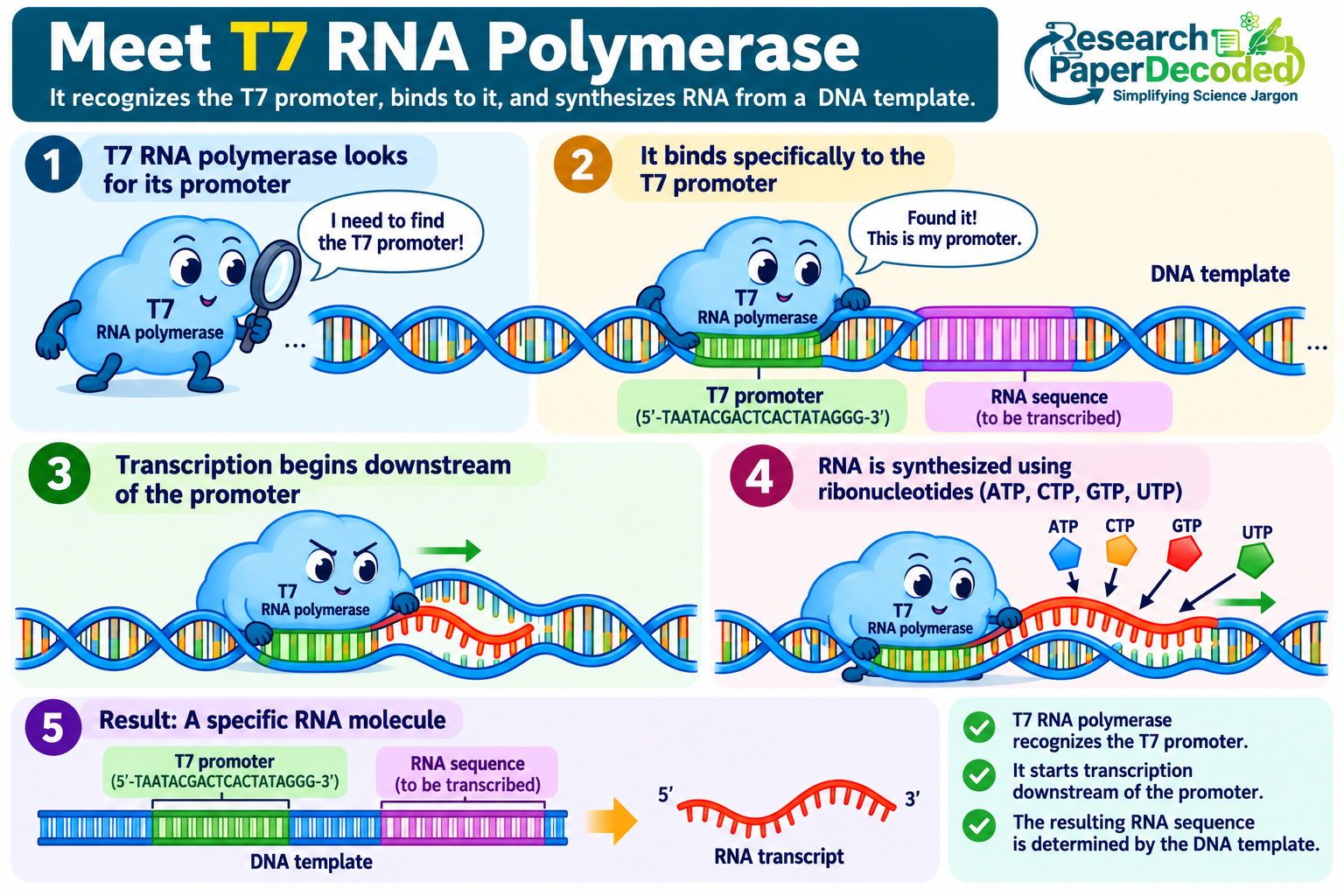
T7 RNA polymerase is an RNA polymerase originally associated with bacteriophage T7. It has become one of the most widely used enzymes for laboratory RNA synthesis because it recognizes a defined T7 promoter and can efficiently synthesize RNA from a DNA template.
The important point is that T7 RNA polymerase does not simply bind randomly to DNA. It looks for its promoter. Think of the promoter as an address label.
The DNA template contains the information we want to transcribe. The T7 promoter tells the polymerase where to begin.
9. What Is the T7 Promoter?
A commonly used T7 promoter sequence is: 5′-TAATACGACTCACTATAGGG-3′
The exact template architecture can vary depending on the IVT system and the RNA being produced. The important thing is not simply to memorize the sequence. It is to understand what the sequence does. The T7 promoter tells T7 RNA polymerase: “This is where transcription begins.”
The DNA sequence downstream of the promoter then determines the RNA that will be synthesized. The promoter is therefore not the entire RNA template. It is the recognition and initiation region that positions T7 RNA polymerase correctly. Understanding this distinction makes DNA-template design much easier to understand.
10. Designing the DNA Template for In Vitro Transcription
Now we can move from concept to method. Suppose we want to synthesize a Cas12a crRNA. We first need a DNA template containing the information required to produce that RNA.
The T7 promoter sequence on DNA template provides the recognition site for T7 RNA polymerase. The downstream sequence provides the information that will be transcribed into RNA. The resulting RNA can then function as the crRNA for the Cas12a system.
Depending on the experimental design, the DNA template may be generated using synthetic oligonucleotides, PCR amplification, or a plasmid-derived template. The important principle remains the same: If you want a particular RNA, you first need a DNA template that contains the information required to make it.
11. Why Are G Nucleotides Sometimes Added Near the Start?
There is another interesting detail in T7-based IVT. The first few nucleotides of an RNA transcript can influence how efficiently T7 RNA polymerase initiates transcription.
For some templates, additional guanine (G) residues are introduced near the transcription start site to improve RNA production. For example, studies involving Cas12a crRNA synthesis have reported that adding G residues at the 5′ end can improve IVT efficiency.
But there is an important lesson here: More RNA is not automatically better RNA.
If additional nucleotides change the intended structure or functional end of a guide RNA, their effect on downstream biological activity must also be considered. Therefore, template design involves balancing two things: transcription efficiency and RNA sequence and function. This is exactly why understanding the molecular logic behind IVT is more useful than simply memorizing a protocol.
12. From DNA Template to RNA: The In Vitro Transcription Reaction
Once the DNA template has been designed, the actual IVT reaction is conceptually straightforward. The reaction contains the essential components required for RNA synthesis.
The major components include:
DNA template:- Contains the T7 promoter and the sequence to be transcribed.
T7 RNA polymerase:- Recognizes the promoter and synthesizes the RNA.
NTPs:-ATP, CTP, GTP, and UTP provide the building blocks for RNA synthesis.
Reaction buffer:- Provides the chemical environment required for polymerase activity.
Additional components:- Depending on the IVT system, components such as magnesium ions, reducing agents, and RNase inhibitors may also be included.
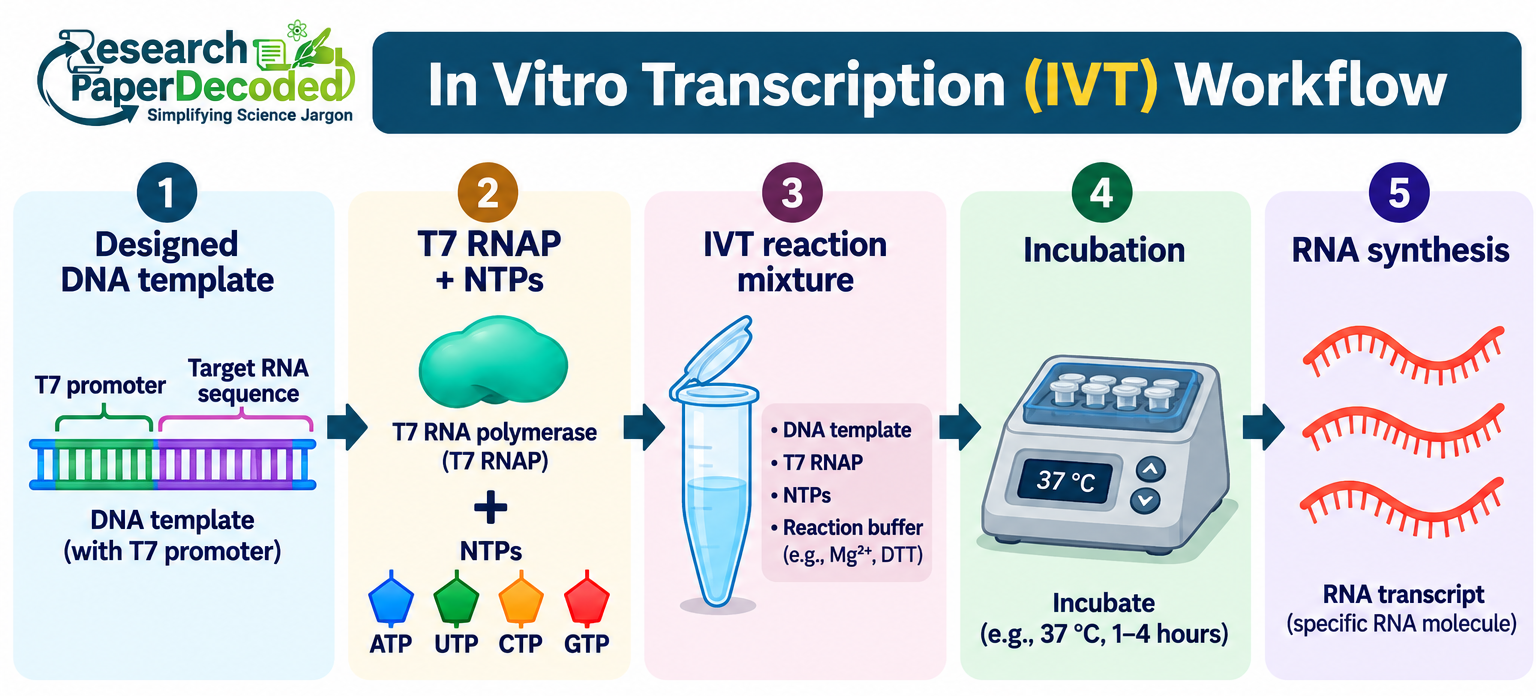
The exact reaction composition and incubation conditions depend on factors such as the polymerase, template, transcript length, and the specific IVT system being used. The important point is that once the molecular components are assembled correctly, the reaction essentially provides the environment in which T7 RNA polymerase can perform transcription outside the cell.
13. What Actually Happens Inside the IVT Tube?
At the molecular level, the reaction is a sequence of coordinated events.
- First, T7 RNA polymerase recognizes the promoter.
- The polymerase positions itself at the transcription start site.
- The enzyme then begins incorporating ribonucleotides.
- ATP, CTP, GTP, and UTP are joined together through phosphodiester bonds as the RNA strand grows.
- The RNA is synthesized in the 5′ → 3′ direction while the polymerase moves along the DNA template.
- As transcription proceeds, the RNA molecule becomes longer until the polymerase reaches the end of the template and releases the newly synthesized transcript.
This type of template-directed RNA synthesis is often described as run-off transcription. In this sense, an IVT reaction can be viewed as a tiny molecular manufacturing system.
14. What Happens After Transcription?
The RNA produced by IVT is not automatically ready for every downstream application. The reaction mixture contains much more than the desired RNA.
It may contain the original DNA template, RNA polymerase, unused nucleotides, salts, buffer components, and other reaction products. So the newly synthesized RNA generally needs to be separated from these components.
One important step is removing the original DNA template. This is commonly achieved using DNase, an enzyme that degrades DNA while leaving the RNA transcript available for subsequent purification. The overall process is therefore:
IVT reaction –> DNA template removal –> RNA purification –> RNA concentration and quality assessment –> Downstream application
The purified RNA can then be used in the experiment for which it was designed. For a Cas12a application, that may mean using the RNA as a crRNA.
15. How Do We Know That the RNA Was Successfully Synthesized?
Producing RNA is only one part of the experiment. We also need to know whether the expected RNA was actually produced and whether it is suitable for the intended application.
RNA concentration
The amount of RNA can be measured using an appropriate RNA quantification method such as NanoDrop.
RNA integrity
The RNA can be analyzed to determine whether the expected transcript is present and whether significant degradation has occurred. This is where gel-based analysis can become useful. If you want to understand how nucleic-acid bands are interpreted and what different band patterns can tell you, see our article on [Agarose Gel Bands Explained].
Functional validation
For many applications, however, concentration and apparent integrity are not enough. For a Cas12a experiment, the most important question is: Does the synthesized crRNA actually guide Cas12a toward the intended target?
This illustrates a broader principle in molecular biology: A molecule can be present without necessarily being functional. The final test is therefore often biological or functional rather than purely analytical.
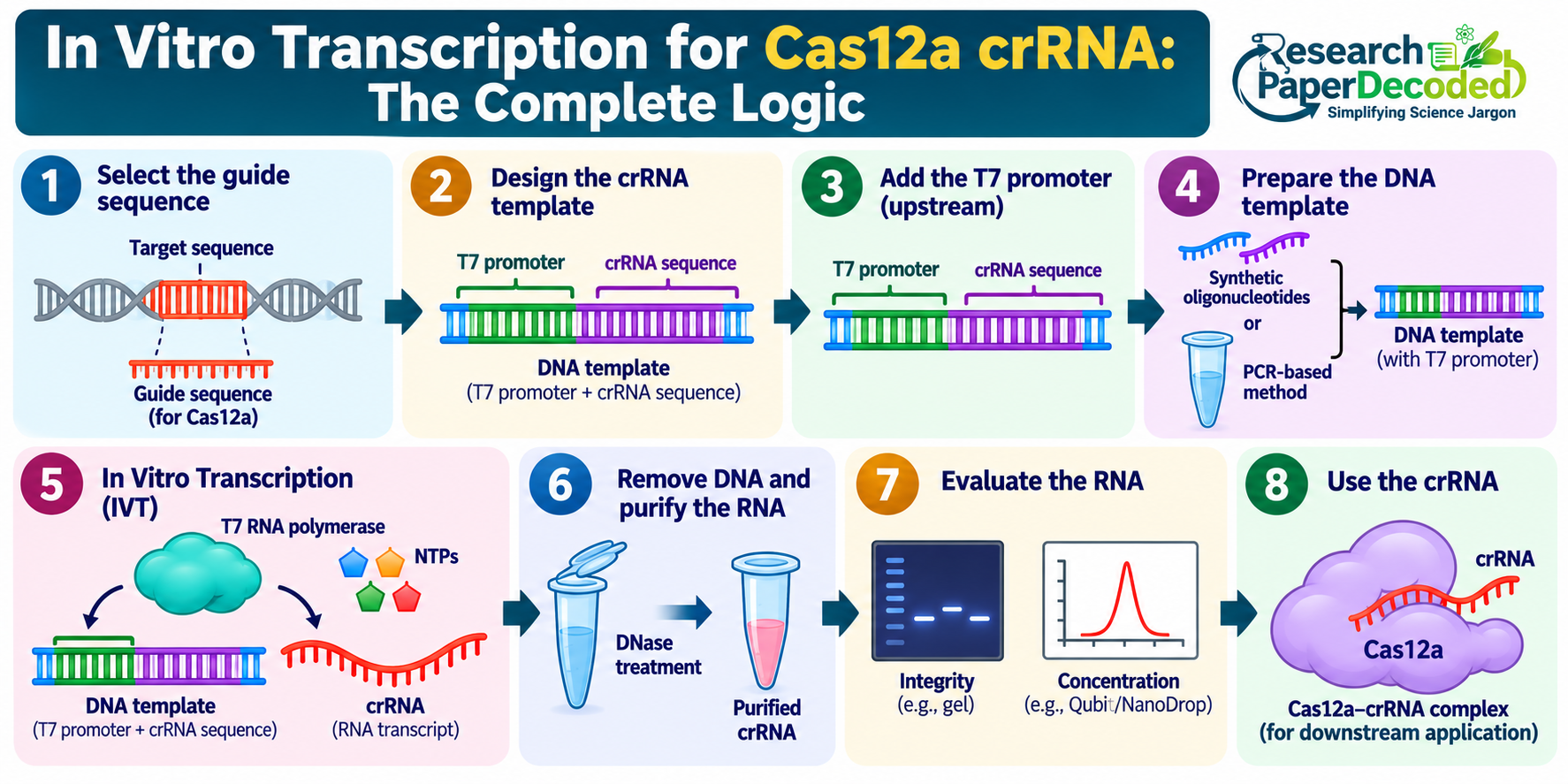
16. In Vitro Transcription for Cas12a crRNA: The Complete Logic
Let’s now connect all the pieces. Suppose a researcher wants to generate a Cas12a crRNA for a particular target. The process begins with the target sequence.
Step 1 — Select the guide sequence: A target-specific sequence is selected according to the requirements of the Cas12a system.
Step 2 — Design the crRNA template: The desired crRNA sequence is incorporated into a DNA template.
Step 3 — Add the T7 promoter: A T7 promoter is positioned upstream of the sequence to be transcribed.
Step 4 — Prepare the DNA template: The appropriate DNA template is generated using synthetic oligonucleotides, PCR-based methods, or another suitable strategy.
Step 5 — Perform In Vitro Transcription: T7 RNA polymerase uses the DNA template to synthesize the RNA.
Step 6 — Remove the DNA and purify the RNA: The original DNA template is removed, commonly through DNase treatment, followed by RNA purification.
Step 7 — Evaluate the RNA: The concentration and integrity of the RNA can be assessed.
Step 8 — Use the crRNA: The resulting crRNA can then be combined with Cas12a for the intended experimental application.
17. In Vitro Transcription Is More Than an RNA-Making Technique
At first glance, IVT may appear to be simply a method for producing RNA. But its importance goes much deeper. It allows researchers to separate RNA production from living cells. That means RNA can be designed, synthesized, purified, and studied in a controlled environment. The same fundamental principle can therefore support very different applications.
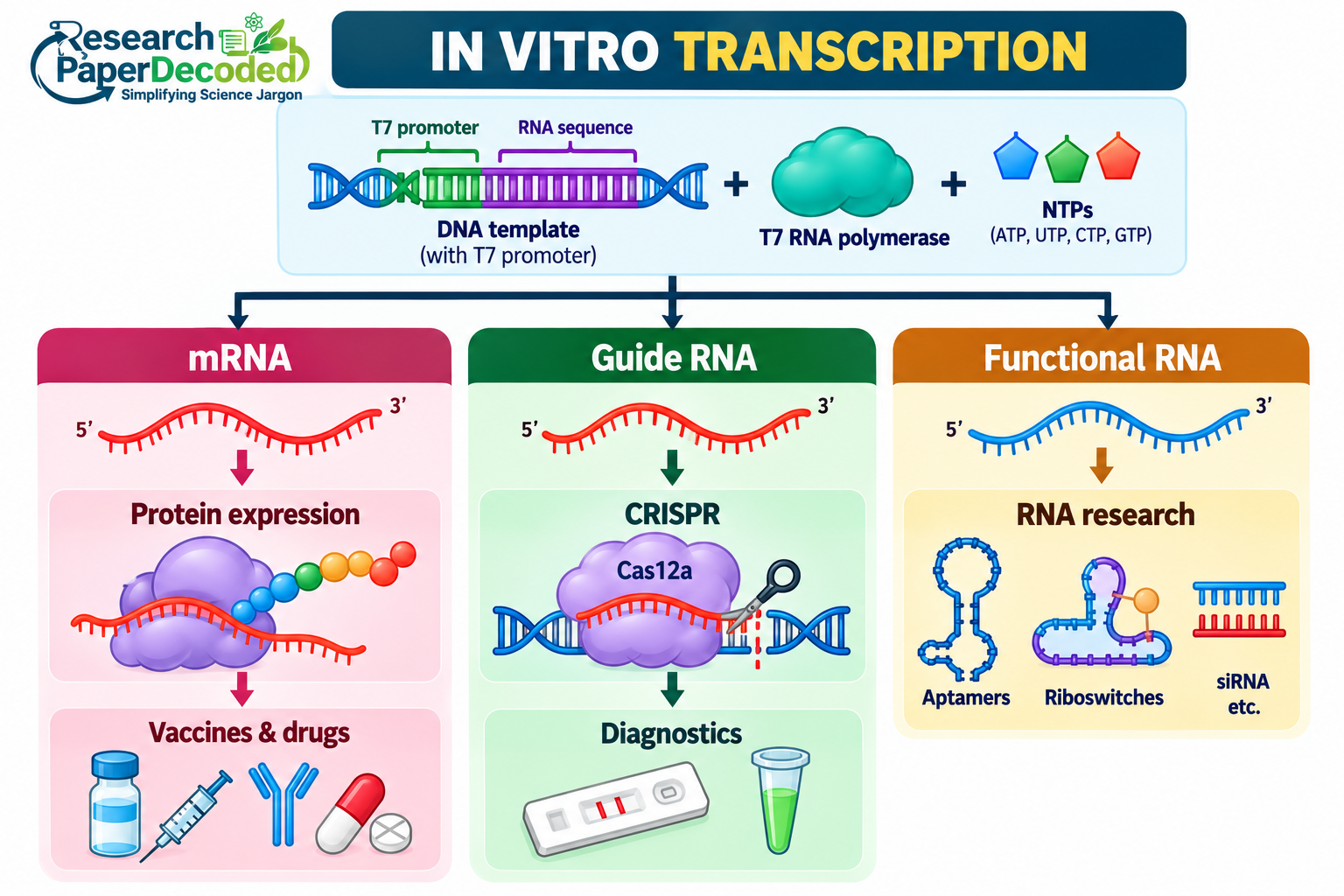
The applications may look completely different. The underlying molecular principle remains the same:
DNA information is converted into a defined RNA molecule outside the cell.
18. From a Natural Process to a Molecular Technology
Let’s return to the question we started with. What is In Vitro Transcription?
At the simplest level, it is the synthesis of RNA from a DNA template outside a living cell. But that definition does not fully explain why the technique is so useful. The real power of IVT comes from the ability to design the DNA template ourselves.
Once we understand what a promoter does, what an RNA polymerase recognizes, how a template is organized, and how the resulting RNA can be used, transcription becomes something that researchers can deliberately control.
The RNA produced by IVT may become an experimental reagent. It may encode a protein, function as a guide for a CRISPR system. It may serve as a diagnostic control or it may become part of a therapeutic or vaccine platform. This reflects a recurring theme throughout molecular biology:
Nature provides the molecular machinery. Molecular biology learns how to control it.
In Vitro Transcription is a beautiful example of that idea.
Key Takeaways
- In Vitro Transcription is the synthesis of RNA from a DNA template outside a living cell.
- T7 RNA polymerase is one of the most widely used enzymes for laboratory RNA synthesis.
- The T7 promoter provides the recognition and initiation site for T7 RNA polymerase.
- The DNA sequence downstream of the promoter determines the RNA that is produced.
- IVT-generated RNA has applications in RNA research, protein expression, vaccines, therapeutics, synthetic biology, and molecular diagnostics.
- CRISPR systems can use IVT-generated guide RNAs; for Cas12a, the guide is generally referred to as a crRNA.
- Designing the DNA template correctly is central to successful IVT.
- RNA concentration alone does not establish biological function; the synthesized RNA may also need functional validation.
Final Thought
The next time you see an IVT protocol that begins with a short DNA template and ends with purified RNA, remember what is actually happening. A process that normally takes place inside a living cell— DNA → RNA —has been reconstructed inside a tube.
The difference is that, in the laboratory, we choose the DNA template, we choose the RNA sequence, and we decide what that RNA will be used for.
And that is what makes In Vitro Transcription such a powerful molecular biology method.

Editor, Research Paper Decoded